
UX/UI Design Approach in Human-Machine Interfaces within the Defence Industry
The defence industry is a field in which high-risk decision-making moments occur and systems are developed that have a direct impact on human life. In this context, UX/UI design is not merely an aesthetic choice but a strategic component that determines operational success.
Human-Machine Interfaces (HMIs) represent the most critical interaction point between the user and technology, and the success of this interaction depends on a holistic design approach shaped by military standards, mission scenarios, hardware compatibility, and user habits.
In this article, we explore how UX/UI design should be approached in the defence sector — distinct from conventional digital projects — focusing on design principles that support clarity, reliability, and rapid decision-making. We delve into innovative methodologies shaped by real user scenarios, design system frameworks, and interdisciplinary integration.

Pursuing Clarity through UX/UI in Critical Mission Environments
The interface used by an operations planner in a command centre, the control panel of a land/air/sea asset (manned or unmanned), or a system dashboard monitoring all of these assets from a central point cannot be designed using identical UX principles. Yet, clarity, simplicity, and reliability remain common and indispensable needs across all use cases.In defence projects, interface design should therefore be grounded in principles that prioritise clarity, simplicity, consistency, instant feedback, and adaptability. This approach not only enhances usability but also makes a critical difference in time-sensitive decision-making processes—because here, we are not dealing with financial loss, but systems that can directly affect human lives.For instance, a radar operator may need to make a decision about an aerial contact within just three seconds. In order to determine whether the contact is friendly or hostile, and to analyse the situation and respond appropriately, the interface must support the user’s memory and cognitive flow. Elements such as colour coding, iconography, layered information hierarchies, and interaction patterns directly influence the accuracy of such decisions.
The interface used by an operations planner in a command centre, the control panel of a land/air/sea asset (manned or unmanned), or a system dashboard monitoring all of these assets from a central point cannot be designed using identical UX principles. Yet, clarity, simplicity, and reliability remain common and indispensable needs across all use cases.In defence projects, interface design should therefore be grounded in principles that prioritise clarity, simplicity, consistency, instant feedback, and adaptability. This approach not only enhances usability but also makes a critical difference in time-sensitive decision-making processes—because here, we are not dealing with financial loss, but systems that can directly affect human lives.For instance, a radar operator may need to make a decision about an aerial contact within just three seconds. In order to determine whether the contact is friendly or hostile, and to analyse the situation and respond appropriately, the interface must support the user’s memory and cognitive flow. Elements such as colour coding, iconography, layered information hierarchies, and interaction patterns directly influence the accuracy of such decisions.
Real User Scenarios
In UX/UI processes, it is crucial to go beyond theoretical approaches and develop user scenarios grounded in real field conditions and operational environments. UX design must adapt and vary according to these scenarios.
Whether it’s a radar operator making a decision within three seconds, a mission planner coordinating three simultaneous operations, or an unmanned system operator reacting instantly to environmental changes—these examples all highlight how user-centric systems must be when designed for individuals working under high stress.
Creating scenarios is a critical pre-design step.
The scenarios discussed in this section are inspired by real mission profiles and are tailored to the needs of users interacting with different system components. The objective is to place the user at the centre of the screen and design an experience that allows fast, accurate, and meaningful access to information.
Below are three key use cases frequently encountered in defence projects:
Inventory Management
Let’s consider a simplified inventory scenario: during a mission, a munitions operator needs to monitor the types and quantities of munitions loaded onto a UAV or MA (Manned Aircraft), and access crucial data such as inspection dates, serial numbers, and active status. The system should automatically check compatibility with the mission plan and highlight any mismatches with coloured warning icons.
In this scenario, the inventory screen should not be designed as a conventional data table, but rather as interactive cards linked to specific missions. This way, the operator can access relevant munitions details directly, without having to filter through technical data, ensuring they remain within the mission context.
In the stock management module, the interface should present both quantity and status using dual-format indicators (numeric + visual icon). Key considerations include:
Mission
Planning
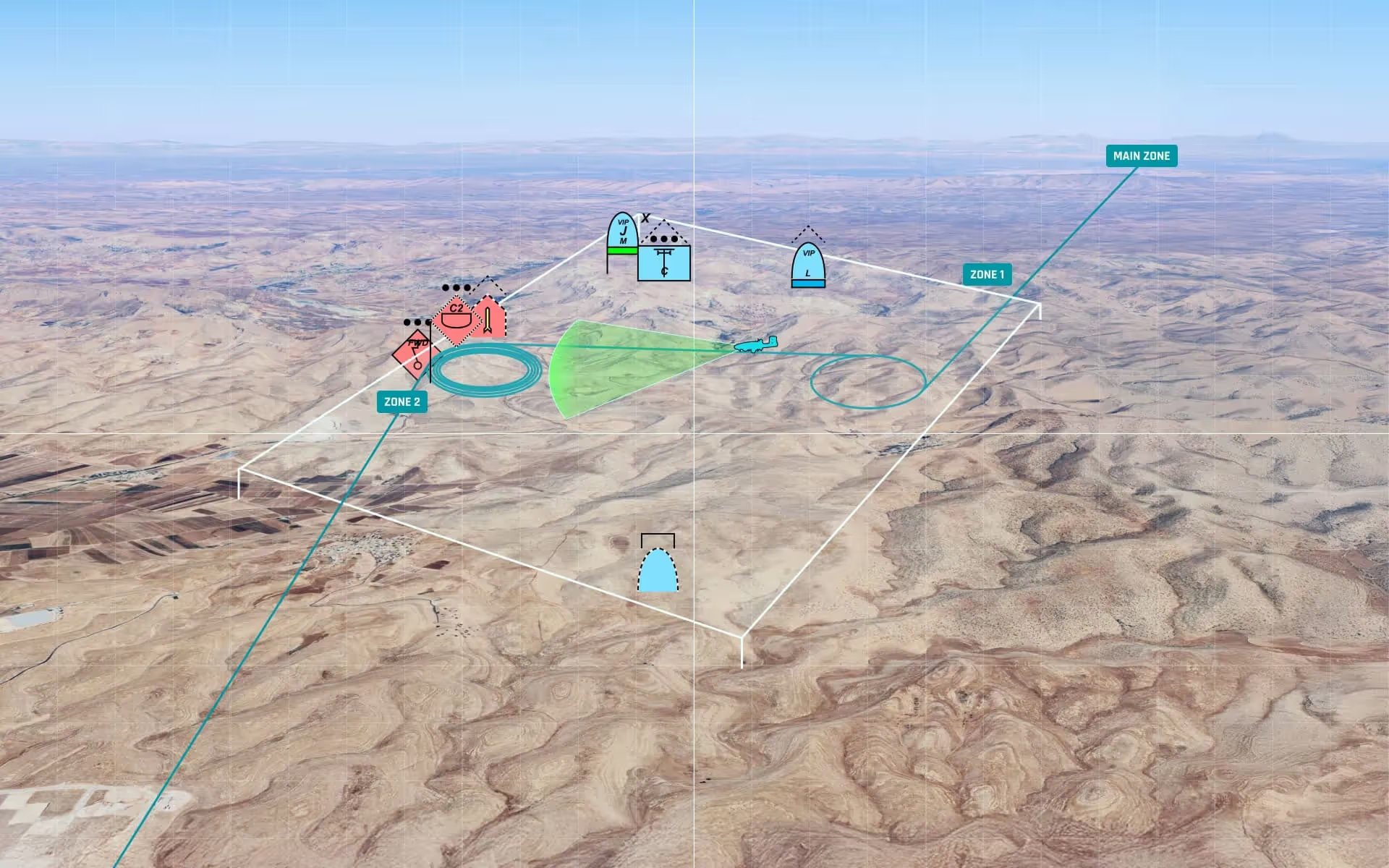
A command centre officer is simultaneously planning three different missions: one for reconnaissance, one for engagement, and one for withdrawal. On the map screen, each asset is represented by a distinct tactical symbol (according to NATO APP-6 standards). Each mission has specific parameters such as travel time to and from coordinates, communication range, and area of effect.
Unlike traditional map applications, the mission map interface should allow filtering by operational layers. The user should be able to view only the engagement mission or see overlaps between all missions in real time. Each asset’s mission should be displayed alongside a timeline.
The symbols used on the map must follow STANAG APP-6 standards and be dynamically positioned based on mission status.
Attention should be given to enabling:
· Simultaneous planning of multiple missions
· Real-time mission timelines
· Visual identification and resolution of mission conflicts
Asset
Control
A control station operator making real-time decisions may need to monitor the health systems of an unmanned ground vehicle. This includes live data on battery levels, motor temperature, communication signal strength, and surrounding environmental factors (e.g. terrain gradient, temperature, wind conditions).
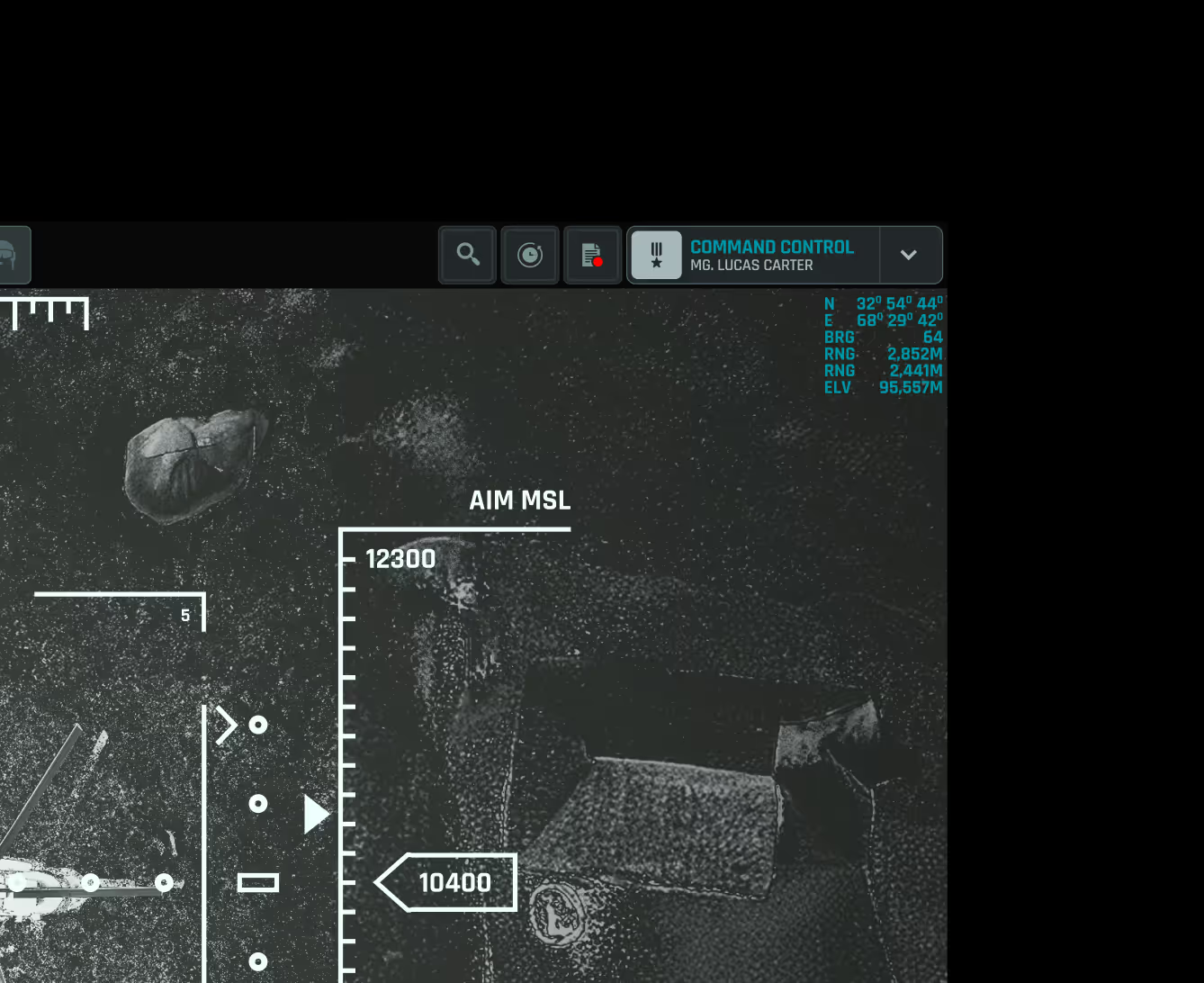
The interface should be built around a central “asset card” structure. Each card should contain health indicators, inventory status, and actionable buttons, all visually supported by graphics.
Additionally, the user must be able to view environmental risks at the asset’s current location—such as steep gradients or high winds—through dynamic map indicators. These environmental factors should be displayed not just as raw data, but with meaningful visual indicators that aid rapid understanding.
Designing in Accordance with Military Standards
The NATO and STANAG APP-6 standards define the structure and meanings of military symbols.
MIL-STD is a tactical symbology standard issued by the United States Department of Defense. It outlines the form, colour, and meaning of symbols used on military maps and tactical displays. This includes icon sets for friend/foe/unknown identification, units, vehicles, sensors, as well as methods for marking missions, routes, and zones. It also covers visual hierarchy and scalability criteria.
STANAG APP-6, developed by NATO, is the standard used by NATO member countries for military symbology. It enables interoperability between nations during joint operations by establishing a shared iconographic language aligned with NATO terminology.
Compliance with symbology standards requires careful management of visual density, preservation of readability, and reduction of cognitive load in interface design. In this context, it helps ensure a user experience that can be understood by any military personnel, regardless of language, thereby enhancing clarity and operational efficiency.
Key Considerations in the Use of Colour
Defence industry projects are often subject to high levels of confidentiality, meaning developers and designers do not have access to the wealth of open examples available in the civilian sector. With limited open-source references, case studies, or interface systems to consult, the resulting designs may not fully reflect user habits and can sometimes be based on imagined rather than real operational scenarios.
In particular, military environments portrayed in films, television series or video games are frequently exaggerated or dramatized. This can lead some developers working on defence projects to make design decisions that are far removed from real-world needs and standards. Yet defence systems, by their nature, impact human life directly and therefore demand an exceptional degree of accuracy and responsibility.
In this context, it is perfectly normal for designers to find very few references when researching for inspiration during early design stages or draft development. However, this lack of precedent can sometimes lead to unconventional or unsuitable colour choices. The use of symbolic colours—particularly red—extends beyond general UX principles and becomes a matter of strict importance under military standards.
In UX/UI design, colours are typically used for semantic coding. However, this coding does not carry the same meaning across all industries. In the defence context, red is most often associated—within NATO and MIL-STD interface standards—with negative or critical states such as alarms, threats, losses, or system failures. As such, red triggers an instinctive “emergency response” in users. Choosing red for purely aesthetic reasons or out of habit may result in an operator misinterpreting a routine state as a sign of danger. This can in turn lead to misreading of system messages, unnecessary stress or distraction, and even a perceived loss of trust in the system’s reliability.
Design System Development and Component Usage
Defence projects are, by nature, long-term undertakings. Systems may remain in service for many years, and while new software requirements may emerge over time, the core hardware infrastructure and interface components often remain unchanged. For this reason, it is critically important to establish a modular, sustainable, and standardised design system from the very beginning.
Even when projects differ, shared components can be used across various systems within the same organisation. Within button hierarchies, clear visual and functional distinctions must be made between critical, primary, secondary, and danger actions. Colours specific to alerts, warnings, information messages, and confirmations should be predefined.
This structure not only saves time but also offers significant advantages in terms of training, maintenance, and operational safety. When operators encounter consistent interface behaviours across different systems, the learning curve is reduced and the likelihood of user error decreases.
A delayed screen load, a late-appearing alarm message, or sluggish response to user input can directly lead to mission failure—or worse, loss of life. As such, heavy visual transitions, animations, and graphic effects are generally avoided. Information must be delivered to the user as quickly and clearly as possible. UI elements should respond instantly, and interaction latency must be minimised.
Building a military-grade design system is not simply a matter of design aesthetics; it is essential for ensuring operational continuity and safety. Each new module or system developed under this approach builds upon the previous one and contributes to institutional consistency.
Project Management and Integrated Development with the Software Team
Defence industry projects rarely start at speed, as they require extensive preparation, planning, and documentation. However, when well-planned, the project process can progress with exceptional efficiency and at a high pace.
The success of user interfaces is not measured solely by their visual appeal, but by their software feasibility and overall system integration. For this reason, continuous and integrated collaboration between UX/UI teams and software developers is of critical importance throughout the project lifecycle.
In Human-Machine Interface (HMI) projects especially, visual prototyping alone is not sufficient, unlike in more conventional design workflows. Designs must be simulated using real operational scenarios, and potential user interactions should be tested alongside system behaviours. This approach ensures that what is being evaluated is not just how the interface looks, but how it performs within the actual system.
Interdisciplinary integration enables the interface to be optimised not only in terms of how it appears to the user, but also in how it functions and how it is trained. It ensures a comprehensive understanding and refinement of the interface from all operational perspectives.
User Testing – Privacy and Information Security
One of the greatest challenges in the UX process of defence projects is restricted access to data. The inability to conduct tests with real users, the need to work with fabricated data, or even having to "depict" certain screens without actual functionality can significantly limit a designer’s capabilities. In such contexts, creativity is often measured by one’s ability to navigate and overcome these constraints.
Since real user testing is not always possible due to confidentiality restrictions, alternative methods such as prototype testing in simulated environments, scenario-based task flows, and click-through prototypes for validating user journeys are used. These approaches allow design decisions to be validated in an operational context at an early stage.
UX Agency or In-House UX Team?
UX/UI units within defence industry companies often operate with a hardware-first approach. However, a UX/UI agency with sector-specific experience can contribute innovative, more agile, and user-centred solutions by leveraging know-how gained from a variety of projects.
Working with an agency well-versed in industry standards provides not only the perspective of an external designer but also a strategic, analytical, and creative outlook. In the defence sector, a UX designer is not merely a screen creator; they are also a strategist, analyst, consultant, and often someone who understands the user better than the user themselves.
At Merkur Design, we design safer, more sustainable, and innovative Human-Machine Interfaces with our sector knowledge and multidisciplinary design approach. We approach projects with a holistic, human-centred mindset, developing solutions that place the user firmly at the core.